
The Polish Hussars, with their winged lances and unwavering courage, are celebrated as the saviors of Vienna, halting the Ottoman siege in 1683. Their resolute defense marked a turning point for Europe, guarding the continent from eastern threats. Fast forward to the present day, and once again, Poland and the rest of Central Europe find themselves at a crossroads. This time, it’s not the Ottoman Empire knocking at the gates, but a new, subtle force from the East – the dragon of the 21st century, China. As Poland navigates a complex dance with a modern-day behemoth, we delve into the intriguing tale of the past and present, where history rhymes and the Hussars’ spirit echoes in the corridors of diplomacy and trade.
The Gathering Storm
The Chinese Communist Party (CCP) constitutes a formidable challenge, not solely confined to the Indo-Pacific region, but also to Europe. The People’s Republic of China (PRC) is an existing and immediate concern for the security, political, and economic stability of the European Union (EU). Within the European context, the PRC presents substantial non-military threats by actively pursuing economic, diplomatic, and informational strategies aimed at influencing the range of policies politically acceptable to the mainstream population at a given time) in alignment with its objectives. A more detailed examination of how Chinese enterprises operating in Europe contribute to various aspects of the CCP’s political apparatus can highlight effective countermeasures against state-sponsored intrusions with the potential to destabilize the European continent.
Weaponizing Capital in Europe
In numerous European states, the PRC is perceived not primarily as a diplomatic collaborator, but rather as a key economic ally, emphasizing financial influence over fostering mutually beneficial relationships. Chinese enterprises, spanning various sectors such as harbors, airports, electronics, telecommunications, and higher education, have strategically invested and established mechanisms of influence over the past decade. Notably, this influence diverges in Central and Eastern Europe (CEE), specifically encompassing Poland, Czechia, and the Baltic states, consisting of Lithuania, Latvia, and Estonia. This region, having endured profound hardships from communism during and after the Second World War, exhibits a distinct perspective.
The countries of CEE understand that both the Soviet empire and the PRC share doctrinal roots in Marxist and Leninist ideology and employ analogous tactics, thereby instigating a heightened wariness towards communism and the ideology embodied by the PRC, in contrast to the approach observed in Western Europe, with less direct historical interaction with communism. In CEE, there exists a recognition that while Russia may pose a preliminary threat, the enduring and more pronounced menace emanates from the PRC. The Prime Minister of Estonia, Kaja Kallas, a possible candidate for the next NATO Secretary General, stated the general sentiment of the CEE: “with China, it’s the same as with Russia”.
National and Subnational Subversive Investments
The case of European ports demonstrates Chinese economic encroachment, in line with their global infrastructure development strategy, known in the West as the One Belt, One Road Initiative, which also aligns key global infrastructure under the PRC. The Piraeus Port of Greece’s capital city, Athens, is Europe’s biggest passenger port and second largest in the world—built and owned by the Chinese government-owned China Ocean Shipping Company, Limited (COSCO) Group. Hamburg Port is the third-busiest port in Europe and is now also owned by COSCO Group. German Chancellor Olaf Scholz backed the latter sale, despite concerns from other EU member states and his country’s own intelligence services. An analogous situation unfolded with the Nord Stream 1 and 2 Gas Pipelines from Russia to Germany over the protests of Poland and other European nations. CEE nations encouraged Berlin to halt the investment as it breached European solidarity while doing business with Russia—constantly trying to rebuild “Great Russia” (Ru: Великая Россия)—served as an imperialistic maneuver against European security and stability.
Beyond investments in wealthier European countries, the PRC is also making in-roads in states strapped for liquidity, such as the Balkans. Throughout much of Europe, when there is no national provider able to make an investment, the second round allows foreign companies to make offers. In this underdeveloped region, the entity willing to pay the most while charging the least wins, and PRC state-owned enterprises tend to win state contracts across the Balkans. For example, in North Macedonia, Chinese investors have been managing enormous road and tunnel investment projects. Similar to Africa, South America, and Oceania, Chinese giants have no parallel competition in many places in Europe, enabling PRC state-owned enterprises to be sole source bidders on projects or underbid any other international investors.
A New Influence Front: Academia
Academia has similarly become an area of concern in Europe as an arena of CCP influence. This is most pronounced in the enormous movement around education where, at various Confucius Institutes and Sinology faculties across Europe, the next generation of researchers are financed by the PRC through grants, scholarships, fellowships, and book publications. But there is always a price—writing and lecturing in strict alignment with the CCP’s expectations, contorting how the PRC really functions and how it operates in other countries.
Ultimately, the PRC’s undermining of the legal-political stability of the European Union lies also in adjusting current European policy towards Beijing. While political language is typically driven towards the mean, the statements against Russia, the United States, and even each other, show politicians can be abrasive when they want to unleash verbal barbs. By comparison, soft language of EU politicians referring to the CCP—such as “We have to work together in order to avoid a confrontation in the region” by Josep Borrell, High Representative of the European Union for Foreign Affairs and Security Policy, or “a very clear will to avoid being naive, but neither did we want to embark into a logic of systematic confrontation” from Charles Michel, European Council President—drive the point on how the EU tends to view the PRC.
Turning out the Lights on Capitalism
EU leaders have long been complicit in the PRC’s efforts to leverage Chinese firms to infiltrate European critical infrastructure. Between 2010 and the end of 2012, the volume of Chinese investments in the EU quadrupled, from 6 to 27 billion euros. This rise accompanied the long-standing dual phenomenon of de-industrialization in the West and the PRC’s ambition to pursue an active investment policy in Europe. Between 2015 and 2016 alone, Chinese investment in the EU grew by 77%; including telecommunications, real estate, and the automotive industry. In 2019, the transport, energy, utilities, and infrastructure sectors were the four largest sectors of Chinese foreign direct investment (FDI) in the EU, with 800 million euros.
Chinese-fronted investments in European energy infrastructure provide insight into the CCP’s recurring methods and means. First, Chinese companies acquired majority stakes through initial minority stakes. These investments focus on specific segments of the energy value chain and strategic influence. Whether in electricity transmission or distribution networks, the 2010s saw substantial Chinese investments, first in southern European countries, which were undergoing privatizations, and later in northern Europe.
Chinese companies have stakes in European electric grids, such as the state-owned company China Three Gorges buying Energias de Portugal for 2.7 billion euros in 2011, while State Grid Corporation of China bought 35% of the Italian public holding CDP Reti for 2.4 billion euros in 2014. Similar investments have occurred in renewable energy fields where once again, China Three Gorges bought 49% shares of Energias de Portugal Renewables, while Germany, having registered the world’s highest output of solar energy, became the Chinese preferable recipient. In 2015, there were 900 Chinese companies in Germany, among which 135 were in the renewable sector, automotive (specifically Volvo Cars and the tire maker Pirelli), and telecommunications systems wherein Germany and Italy continue to rely on Chinese 5G, with Huawei building 59% and 51% of their respective networks amid general European hesitation.
Letting the PRC enter so many critical infrastructure sectors allows the PRC to collect critical intelligence about who is involved in key decision-making and how such decisions are made. Due to Chinese investments and encroachments into the energy sector, the PRC has gained potential leverage against Europe. The PRC has been accused by both the United States and the EU of promoting corruptive behavior as well as frequent use of debt traps—a mechanism that forces some countries into political submission in exchange for reducing unpayable loans.
Poland: Self-Reliance is Independence
The Republic of Poland is a good example to illustrate how to build independence from Chinese economic and military power. Poland understands that economic dependence on an external actor, including energy dependence (Russia for many decades), means de facto losing its own independence and puts pressure on its energy security. Poland, exhibiting the most rapid economic growth in Europe and ranking as the 19th largest economy globally, is engaged in an accelerated process of enhancing and modernizing its armed forces. This endeavor involves a substantial financial commitment, with defense expenditures amounting to 4% of the gross domestic product (GDP), presently standing as the highest within the NATO alliance. Concurrently, there is a proportional investment directed towards the development of critical infrastructure, underscoring Poland’s strategic objective of attaining both security and energy independence.
Based on those actions by Warsaw and the country’s rapid development, Poland is being cited and praised for its consistent economic and military augmentation and ensuing resilience against authoritarian regimes. The latest example was a strong and unapologetic stance of the Polish government to support and finalize the controversial exhibition by the Chinese dissident Badiucao, who portrayed the CCP negatively through his art. The Chinese Embassy in Warsaw tried to cancel the exhibition, without any success.
Additionally, Poland is working on a parliamentary bill to ban both Chinese telecom equipment company Huawei from their 5G networks and the social media platform TikTok. The newly elected Polish Minister of Digitization said, “We must do everything to prevent particular infrastructure from appearing in Poland, which is not fully controlled, and through which Poland could be attacked online.” This aligns with the political recommendations called the Prague Proposals, where European states, most actively represented by Romania, Estonia, Latvia, Czechia, and Bulgaria, pledged to restrict 5G suppliers subject to foreign government influence.
Illustrating Poland’s stance as a bastion against Chinese engagements and, more broadly, authoritarian regimes, it is noteworthy that the pivotal nations of western Europe, namely France and Germany, continue to rely on cost-effective natural resources from Russia. This dependence positions the aforementioned countries as economic allies of Moscow within the European context and Beijing through the newly minted ‘No Limits Partnership’ of Russia and the China. Chinese companies that predominantly follow the CCP’s priorities own or have major stakes in a wide range of European critical infrastructure, including ports, airports, electricity companies, wind, and solar farms, as well as telecommunications. Greece, Italy, Portugal, Spain, Belgium, the Netherlands, Germany, and France present the gravest examples of this type of influence by the CCP.
The part of the European Union known as the Three Seas (3S) region—countries between the Baltic Sea in the North, the Adriatic Sea in the West, and the Black Sea in the East—attracts both the US and the PRC in terms of geopolitics, defense, and economic investment. Committed to technological and infrastructure development, this region currently offers significant investment potential. Poland proudly represents the 3S Initiative and is a long-standing American ally, advocating for the American umbrella and strongly prioritizing digital security—a dimension that could undermine both Russia and the PRC’s One Belt, One Road Initiative.
Fears on the Plains and the Strength to Resist
The current greatest anecdotal fear of the CCP in the central European plain is that critical infrastructure can be targeted by the PRC either during a major conflict, or even below the threshold of armed conflict, taking advantage of events such as a natural disaster, a large sporting event, or a pandemic to better realize CCP aims. The real concern is over digital security and Europe’s dependency on Chinese technology. The United States does not want to allow the PRC—which currently offers infrastructure with the best price and quality ratio, making it an attractive 5G provider—to control networks in Europe, especially in the Three Seas region, which is crucial to the security of the West, and which strategically relies on American companies.
Solutions to counter Chinese threats are not simple as the threats encompass the economic, legal, and political domains. European security cannot exist in a vacuum and relies on an American umbrella. American presence along Europe’s eastern flank, primarily in Poland, given its continuous position as a strategic ally for the United States, is one of the needed examples of mutual connections.
The United States and the EU should work on aligned solutions in the domains of the economy, public policy, and technology. The EU and the United States have the largest bilateral trade and investment relationship and enjoy the most integrated economic relationship in the world. Although overtaken by the PRC in 2020 as the largest trading partner specifically for goods, the United States remains the EU’s largest trading partner by far when services and investment are considered. The EU and the United States launched the EU-US Trade and Technology Council (TTC) in 2021. The TTC serves as a forum for the EU and the United States to coordinate approaches to key global trade and corresponding economic and technology issues, primarily designed to strengthen semiconductor supply chains, curb non-market trade practices, and adopt a more unified approach to regulating global technology firms. The two sides agreed to exchange information on investment trends affecting security, including industry-specific trends, origin of investments, and types of transactions focusing on sensitive technologies and data.
CEE countries, organized in the Three Seas Initiative, have chosen the Euro-Atlantic partnership. Now, it is imperative for Western Europe to reexamine the security implications of the ties it has with the PRC and enhance transatlantic cooperation to ensure the continuation of the rules-based order that Europe and the United States have collaboratively buttressed.
Dr. Joanna Siekiera is an international lawyer, legal advisor, consultant at NATO, and a Non-Resident Fellow at the Brute Krulak Center for Innovation & Future Warfare at the Marine Corps University.
The views expressed are those of the author and do not represent the official position of the Irregular Warfare Initiative, the United States Marine Corps, or the United States Government.
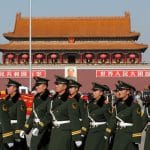
Main Image: Chinese New Year Celebration, Paris France 2013 (12019 via Pixabay)
If you value reading the Irregular Warfare Initiative, please consider supporting our work. And for the best gear, check out the IWI store for mugs, coasters, apparel, and other items.


Paul says
With acknowledgement to the function of time, the role of ambiguity, and the problems of attribution in the context of strategy, how aggressively should the threat be articulated? Assuming the desire is to achieve that “augmentation” at scale.