

On November 28, 1997, in a small village in Kosovo, three armed men interrupted the funeral of a schoolteacher to proclaim the revolution of the Kosovo Liberation Army (KLA) against Serbian authority. Roaring applause conveyed the crowd’s understanding that the age of nonviolent reform was over, while international press outlets reported cautiously on the fiery development in Yugoslavia. Years of shadowy planning by Albanian nationalists was bursting into action.
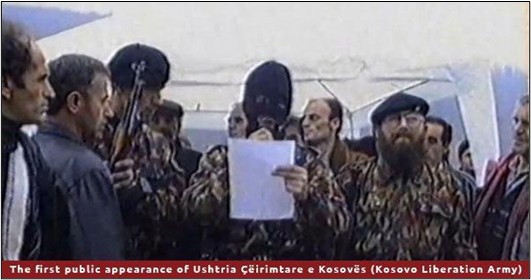
The KLA’s revolutionary proclamation was a combination of theatrical flair and strategic timing. KLA insurgents had struggled for years to gain popularity over their pacifist counterpart, the League for a Democratic Kosovo (LDK), whom the KLA believed were ineffective for securing meaningful Albanian rights under oppressive Serbian authority. By 1997, after years of fruitless LDK reform efforts, the KLA capitalized on mounting public frustration, using the funeral as a boiling point to stage a dramatic challenge to the LDK’s pacifist approach, draw global media attention, and rally Albanians under its banner.
This account of the KLA’s dramatic emergence illustrates how propagandists can exploit psychological advantage at pivotal moments to craft enduring narratives with lasting political impact. The following article uses the Kosovo conflict as a case study to demonstrate how media, martyrdom, and war can be manipulated to shape perception and power alike.
Historical Background
The 1998-1999 Kosovo conflict was part of the larger 1991-2001 Yugoslav wars, which were sparked by ethnic conflict and exacerbated by economic and political instability. Croatia, Slovenia, North Macedonia, and Bosnia’s secessions from Yugoslavia throughout 1991-1992 sparked several multi-front civil wars between the Yugoslav States, wherein most nations fought to retain their historic borders and sometimes to annex “foreign-held” lands inhabited by same-kin. Kosovo primarily avoided the 1991-1995 fray because, as a province of Serbia rather than an independent state, it lacked conventional forces, political autonomy, and historical precedent for nation-state independence.
However, tensions in Kosovo remained. Although Kosovo was officially Serbian territory, ethnic Albanians comprised approximately 80% of its two million residents, while Serbs numbered roughly 10%. Kosovo was therefore an Albanian majority-minority region within greater Serbia, meaning Albanians lacked adequate national representation despite their local majority. Lingual, cultural, and religious divides contributed to hostilities, but were secondary to more tribal/ethnic notions of “us versus them.”
Beginning in 1989, pacifist leader Ibrahim Rugova and his League for a Democratic Kosovo (LDK) used nonviolent protests to petition for greater Albanian rights within Serbian Kosovo. Rugova’s movement enjoyed widespread Albanian support but largely failed to achieve meaningful reform given Serbia’s preoccupation with fighting other Yugoslav States. LDK leaders instead expected significant reform following the inevitable post-Yugoslav war negotiations.
Around the same time, more radical Albanians viewed peace talks as insufficient for achieving true self-determination. For some, negotiations even ran counter to visions of a Greater Albania including Kosovo and surrounding Albanian-inhabited regions. However, these revolutionaries were limited in weapons and lacked popular support compared to the LDK. To overcome these constraints, an asymmetric strategy was needed to provoke tension and capture media attention.
Generating media attention and gaining Western support hinged upon the exploitation of liberal Western ideals. Generally speaking, contemporary liberal Western thought is widely held to obligate the State, as the arbiter of power, to use its power responsibly to ensure peace, diplomacy, and coexistence. Serbian oppression of Albanians, therefore, was widely condemned by Western society, providing violent Albanian resistance a degree of legitimacy in Western eyes. Each Albanian death could be framed as a direct result of Serbian oppression, meaning that KLA attacks and martyrdom only amplified international sympathy. For Western media and audiences, a detailed history of the Albanian-Serbian conflict was unnecessary; what mattered was the immediate perception that Serbia was oppressing Albanians, and that Albanians were dying as a consequence of Serbian oppression. Whether or not the KLA fully understood this, sensationalizing the conflict was more pivotal to their success as an insurgency than any battlefield-underdog victory.
Recognizing this, KLA attacks against Serbian targets began in 1992. While these sporadic ambushes rarely inflicted more than a few casualties, the headlines these attacks generated were the true objective. Newspapers read of bloodshed, martyrs, and a swelling tide of revolution. And once the LDK failed to achieve peaceful reform during the 1995 Dayton Accords, which sought to resolve the many Yugoslav conflicts, many Kosovar Albanians shifted towards revolutionary KLA ideology as a final resort for independence.
Martyrdom and Media
March 5, 1998 marked a turning point in the KLA’s international narrative when Adem Jashari became one of the first Albanian martyrs to achieve global attention. Three days before, Jashari participated in a KLA ambush that killed four and wounded two Serbian police officers. Jashari fled with his band to his nearby hometown of Prekaz, a known KLA stronghold, where they fortified in his family compound—with no less than 50 Jashari family members present. Seeking to make an example of Jashari, Serbian police deployed Yugoslav Army tanks, armored personnel carriers, helicopters, and mortars around the town. Neither Jashari’s band nor his unarmed civilian family responded to surrender commands from Serbian police. Serbian forces understood the potential for collateral damage. Nonetheless, Serbian forces used mortars before nightfall, crashing the roof of the main house and killing several civilians. After a three-day siege, Jashari, his two comrades, and all 50-odd family members were dead, save one niece who reported she “...was threatened [by Serbian police] with a knife to say her uncle killed everyone who wanted to surrender.”
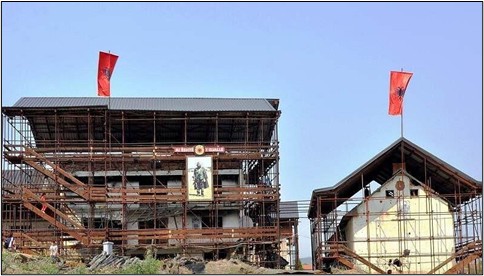
Such a wholesale massacre of civilians was the exact Serbian blunder the KLA needed to propagandize and elicit international sympathy on a macro scale. Serbia’s abrasive conduct made them appear reckless, wanton, and entirely indifferent to civilian life. Such indiscriminate killing was pragmatically unacceptable to the West. These inexcusable actions both popularized KLA ideology as well as set an international perspective that, regardless of Serbian sovereignty over Kosovo, the local Albanian population deserved independence from the yoke of Serbian abuse.
Western media began to view the conflict in a plain dichotomy of strong versus weak, an injustice of Goliath over David, and thus it was the West’s moral and humanitarian imperative to intervene. Western leaders similarly acknowledged the Albanian plight but were frustrated over the KLA’s duplicitous tactics aimed at goading America into protectorate intervention. As then-United States Secretary of State Madeleine Albright aptly noted:
“...There did not appear to be much Jeffersonian thinking within the KLA. Often indiscriminate in their attacks, they seemed intent on provoking a massive Serb response so that international intervention would be unavoidable.”
A later massacre by Serbian forces in January 1999 in Račak followed a similar storyline. After another KLA ambush on police, Serbian forces surrounded Račak. International reporters found a few scattered rifles and 45 corpses in the village center–mostly men, some women, and a 12-year-old child. Serbian officials claimed each was a KLA insurgent and cleaned the site before international investigators could arrive.
Račak marked the final straw for the West. Serbian aggression in Kosovo was not only perceived as wrong in itself, but damaging to the tenuous peace in adjacent countries, which Dayton had resolved. Western powers again compelled peace and reform negotiations between Serbian and Albanian delegates, including the KLA and Rugova. Albanian diplomats demanded an independence referendum while Serbia demanded the KLA’s disarmament …all while America demanded Serbia provide NATO military access throughout Yugoslavia for peacekeeping purposes. No middle ground was possible. Importantly, however, the KLA understood that their Western support hinged upon their perceived willingness to compromise; and so, in spite of the American-led negotiations being counter to the KLA’s own interests, they signed the disarmament accords. This political maneuver was necessary to maintain international favor while losing nothing and gaining everything; Serbia either had to concede independence or face open war. When Serbia predictably refused the accords and launched a new counterinsurgency offensive in Kosovo, NATO intervened on March 23, 1999, until Serbian President Slobodan Milosevic capitulated on June 11, 1999.
Quantifying Media Attention - Who and What Mattered?
Media outlets shape the public’s understanding of a conflict. In order to legitimize their struggle, gain Western support, and transform their relatively inconsequential conflict into an international rallying cry for humanitarian idealism and anti-authoritarianism, the KLA had to engage in basic guerrilla warfare that frustrated Serbian authorities into rash responses. In contrast, Rugova’s diplomatic approach never made it out of the parliaments.
Recent empirical data collection and analyses conducted by the author (see below) revealed that Western media, specifically the US-based Washington Post and the British-based Reuters, reported upon KLA-related terrorism considerably less than issues concerning the suffering of Albanian civilians. For brevity, this section will only refer to data from Reuters given its greater sample size and the similarity of the two outlets’ perspectives.
Reuters narratives describing “Oppression” and “Terrorism” dominated the early months of the conflict, i.e., pre-June 1998 (Table 1). As Serbian counterinsurgency operations dramatically intensified in June 1998, there was a marked increase in media content regarding “Humanitarian/Refugee” concerns. Media focus upon the escalating violence and ethnic expulsions further transformed media coverage from a sympathetic “David” dynamic into a tangible humanitarian issue in which Western audiences felt compelled to intervene.
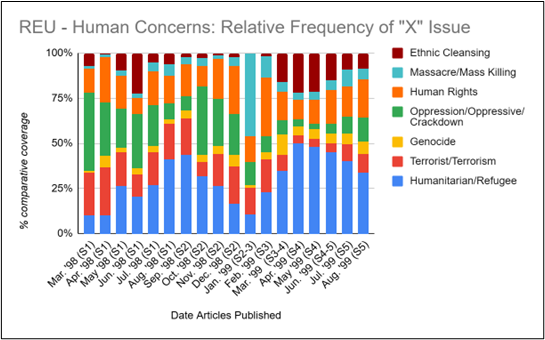
Notably, unlike Bosnia, the media rarely referred to Kosovo in terms of “Genocide,” “Ethnic Cleansing,” or “Massacre/Mass Killing” except for Račak in January 1999. References to terrorism (which occasionally referred to Serbian acts of State/paramilitary terrorism) similarly declined while references toward Albanian oppression and humanitarianism increased, highlighting an overall media favoritism toward the plight of the Albanians. Additional qualitative analyses further revealed that most articles rarely discussed “why” events happened, focusing largely on developments and casualty figures.
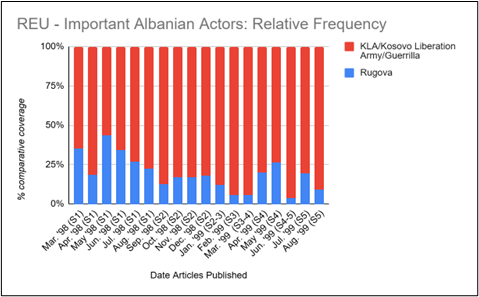
Another notable observation from the data is the media’s fixation on the KLA over Rugova’s pacifist approach. In March, Reuters wrote 826 total articles on Kosovo and explicitly named the KLA 185 times compared to Rugova’s 100. By January 1999, the KLA-Rugova ratio widened to 88% to 12%, and by March 1999, 94.1% to 5.9%, demonstrating Rugova’s waning significance in the global narrative (Tables 2-3). Martyrdom and humanitarian issues were simply more interesting than peaceful reform—at least under Milosevic’s regime.
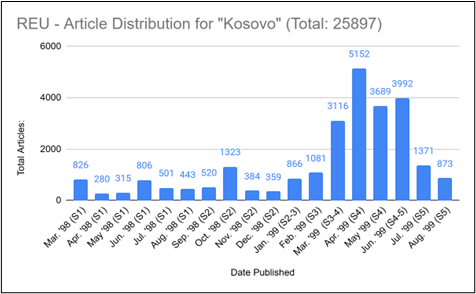
Taken together, the KLA’s strategy of low-intensity guerrilla warfare was remarkably effective at directing international sympathy towards Albanians over Serbian oppression. Serbian retaliations created widely visible political and humanitarian crises that Western audiences deemed morally unacceptable. Media narratives of Serbian brutality not only laid the foundation for NATO intervention, but further provided a demonstrable need to declare Kosovo independent from Serbia–a tenuous situation with an uncertain future.
Conclusion
The analysis above demonstrates how propaganda can shape Western media and public opinion to advance political and military objectives. Martyrdom, especially when civilian casualties are publicized, carries immense moral weight and evokes powerful emotional responses that can prompt sanctions or even military intervention. Albanian insurgents in Kosovo exploited this dynamic, provoking Milosevic into disproportionate retaliation and crafting a David-versus-Goliath narrative that guided Western perception, generated sympathy, and ultimately compelled intervention. Media coverage, focused on humanitarian crises rather than the nuances of diplomacy, amplified their impact, showing that narrative construction can be as decisive as battlefield operations. For modern militaries, policymakers, and peacekeepers, Kosovo underscores a critical lesson: managing optics and perception is integral to strategic success, as the interplay between actions and public narrative can shape conflict trajectories, foreign responses, and the broader political environment.
Acknowledgements & Author Bio:
The author sincerely thanks Professor Robert Burrell of the University of South Florida (Global & National Security Institute) and Professor Chris Mason of the Army War College for their mentorship and comments upon this manuscript. The author also thanks Professors Baki Tezcan and Magdalena Wojcieszak at the University of California, Davis, for their advising and mentorship during his original undergraduate thesis.
Jacob Feinstein is a graduate student in the Security Studies program at Georgetown University, School of Foreign Service. During his undergraduate studies at UC Davis, he wrote an honors dissertation on the history of the Kosovo conflict and how media and propaganda influences Western military decision-making.
Cover Image: OpenAI. Funeral Procession for Adem Jashari of Kosovo with News Cameras Watching. AI-generated image. ChatGPT (GPT-5). 2025. https://chat.openai.com/
The views expressed are those of the author and do not reflect the official position of the Irregular Warfare Initiative, Princeton University’s Empirical Studies of Conflict Project, the Modern War Institute at West Point, or the United States Government.
If you value reading the Irregular Warfare Initiative, please consider supporting our work. And for the best gear, check out the IWI store for mugs, coasters, apparel, and other items.